

Boria Majumdar
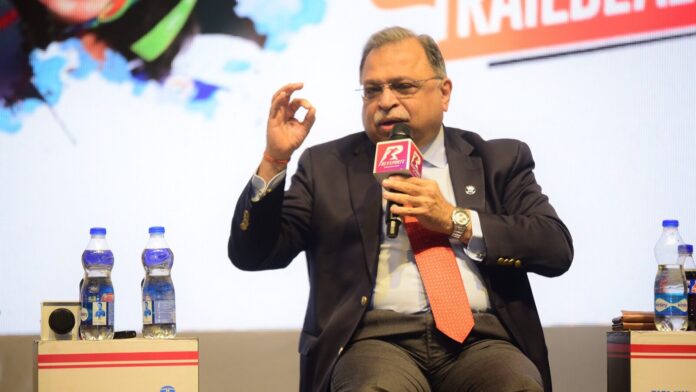
Former Athletics Federation of India president and World Athletics vice-president Adille Sumariwalla has thrown his hat into the ring for the World Athletics presidency, seeking to become the first Asian and Indian to lead the global governing body of athletics.
In an exclusive conversation with Revsportz Editor-in-Chief Boria Majumdar, Sumariwalla speaks about his journey from athlete and coach to administrator, his vision for global athletics, the development and commercial growth of athletics, his campaign ahead of next year’s election, India’s Asian Games prospects and his belief in Indian star Neeraj Chopra.
Here are the excerpts:
Boria: You have now announced your candidature or your intention to contest the presidency of World Athletics. If it happens, first ever Asian, first ever Indian. Can you first tell me, you’ve made it public, what prompted you?
Sumariwalla: Well, I think for me it was just a natural progression. I’ve been an athlete, an Olympian, been a coach, prepared athletes who ran at Olympic Games, then I’ve been an administrator. I started in 1990 at the district level, worked for 10 years, then moved on to the state level, working there for 10 years. So 1990 to 2000 at district level, 2000 to 2010 at state level, 2010 onwards at national level, 2015 onwards at international level.
I have completed two terms as a council member of World Athletics and one term as vice-president and executive board member. So it’s a natural progression for me to move now to the presidency. There’s a couple of reasons why I think I’m well suited to take the job.
I have the experience I have ensured during my regime as president of the Athletics Federation of India. In my first term, we had eight Asian Games medals, in the second term, 18 medals, in the third term, 29 medals. At the Commonwealth Games, three medals to eight medals to 10 medals. Olympic Games, no medals to a gold and silver.
World Championships, from one bronze to a gold and silver. I have run one of the largest grassroots-level programmes in the world. A million children take part in U14, U16. I have worked at all levels, whether it’s at grassroots level, at the lowest of lowest levels.
India again is a country of contrasts. A lot of our athletes come from very rural areas. The majority of them actually come from rural areas. So I understand what it is when we need to do development. A lot of countries in the world, a lot of countries in the world need development. For that, you need money. I have an educational background. I have a bachelor’s in financial accounting and auditing, a master’s in management, an executive master’s from Asian Institute of Management in Manila, where I’m a topper. Then I went and did a short course with Harvard Business School.
I was chairman and managing director of Clear Channel in India, a nine-billion-dollar group. So I have the expertise of running international operations.
If you take everything in totality, whether it’s my work I have done at grassroots, I have done at elite, being a coach, being an administrator, the education, qualifications, work experience. And I think I am absolutely suited to do the job.
Boria: What’s your manifesto? What are you going to do for the world body? When I see athletics worldwide, I think the sport can be better marketed.
Sumariwalla: Let me just step back a little before I can come to my manifesto. When Sebastian Coe took over as president, I was elected at the same time to the council in 2015.
We went through very rough weather, sadly our ex-president was in jail. So, the first thing we worked on was governance. And that was required because that is the foundation. For anything to do well, governance is the foundation. We brought in a governance and integrity unit, which is something we need to protect with every might that we have.
Now we need to look at development. There are so many countries in the world which need development. I’m travelling the world talking to people, understanding the problems so that I can work out a strategic plan.
My thesis at Asian Institute of Management was crafting a strategy and implementing it. So, that’s what I’m in the process of doing. But then again, having run Clear Channel, which is a media group, now running my own media company, I understand where you have to find the money, because if you have the money, you can do development.
Now, where will the money come from? Because in 2029, our commercial agreement with Dentsu is coming to an end. We have to find ways and means of increasing our revenues. So, I’m part of the strategic plan group, the working group on strategic plan, where it’s more people, more partnerships, more fans, more participation.
Now, to do all of that, you require money. Now, again, I feel I have the expertise. I have a degree in finance.
I have work experience for the last 20 years in the field of commercial, with my commercial brain. I’m sure I can negotiate new things, better things. And then we need to then improve our development, whether it’s in coaches, whether it’s technical officials, whether it’s athletes, more prize money to the athletes, make the Diamond League bigger, better, more robust.
How are we going to do that? There are various ways that are in my mind, which I’ll probably put in later during my final manifesto. It’s a year away. I want to give it enough thought.
I want to go to all the congresses. I want to listen to everyone. Only when you listen to everyone can you actually deliver. I have worked as chair of strategic communications. I have worked as the chair of age manipulation. I have worked in human rights, in World Athletics. I have worked on development. I have worked on kids athletics. I worked on finance. I worked on audits. I have basically, you know, done the whole spectrum. And again, I have served three terms. Some of the other people who’ve declared have not, they’ve served two terms. I have much more experience right from the worst days to good days today under Seb Coe. That is why I said, it’s worth it, it’s worth my hat and I think I’ve lots to contribute to World Athletics.
Boria: What would it mean for India if you became the president of World Athletics? With India increasingly embracing sport as soft power as the Prime Minister talks about sport from Red Fort. We’ll be hosting the CWG and bidding for the Asian Games and Olympics. Would an Indian leading one of the world’s biggest sporting federations be the ultimate cherry on the cake?
Sumariwalla: Athletics is probably the number two sport, but it is the number one Olympic sport, 214 countries vote. So at the end of the day, it’s a game of numbers. Not naturally that the best candidates get selected. It’s an election. We have to respect that. And we have to respect everything that goes along with the election. But again, I think it’s huge. The numbers that we have, 214, when you compare it to hockey or to cricket or to anything else. It is huge for India. But I am not looking at India. I am looking at globally what I can do for the world of athletics.
And if you do something right on top, it has to trickle down. And India will benefit from that, that trickle down. India has already made lots of pushes in World Athletics.
So they’ll get the bigger trickle down than anybody else. Because for the last so many years, whether it is with coach education, the number of coaches that we have produced with the help of World Athletics, or the number of technical officials we’ve looked at, you know, we won the bid for the World Indoor Championships in 2028. We have the Asian Relays in 2027, Asian Indoor in 2028.
We bid for the U20 World Championships. So there is lots happening. And I’m sure that India will put up an absolutely fantastic show.
We are well-geared. We are well entrenched into that system. I think the government has given full support, whether it’s on infrastructure, whether it’s on transport, whether everything the government wants to ensure that we really give the best to the world.
We want to showcase that India is a growing superpower. India is moving probably to the third largest economy in a year or so. So I think it’s all positive and it’s best to ride the positive wave.
Boria: Elections are still one year down the line. You’ve got to talk to all your representatives. Is there a plan that you’ve already put in place? What’s the plan going forward?
Sumariwalla: There was originally no plan. It was just my passion when I became a council member in 2015. From then onwards, I have gone to every continent, attending meetings to understand because if you are on a world body, it is so different. I went to Cook Island last year. The whole island you can do in 45 minutes. That’s the country. You go to Norfolk Island, the total population is 1,500 people. They have one vote.
The USA has one vote, now if you have to understand the problems that they have and if you want to do development in those areas, then you need to go by sitting and talking about it.
I’ve been to Africa more than seven or eight times in the last two years, I’ve been to Europe the same number of times. I’ve been to Oceania at least five times. Nobody goes to Oceania. I’m the only guy who’s gone there.
Going to little islands, see the problems that they have, see how they live, see what sort of schools they have. So it’s just that I’m collecting so much information and so much that I am then going to work on once I finish all the congresses, which is a couple of months before the final elections and then I will declare a final manifesto.
But there are already a lot of ideas on how to do development, how to increase competition, how to give athletes better facilities, how to give them more prize money, and what to do with the Diamond League. So there are all these things that are already working, but a final manifesto will come out then. But it’s through years of 10 or 11 years of experience of visiting them, talking to them, sitting with them, listening to them, the time and energy that I have spent to understand the issues, which are so different, so different.
I mean, India and Nepal and Bhutan, we are neighbours, but conditions are so different. So, you have Australia and Norfolk Island, which are just across both and have one vote each. Can you treat them the same? No, they’re different.
So you need a plan to figure out how you’re going to develop these areas. And having been on the Development Commission, and looking after coaches development, looking after kids athletics, looking after the technical official development, that’s all work and part of the Development Commission, which I sit on.
Boria: Less than 20 days left for the Asian Games and athletics and shooting should give India 50 medals, unless we are not going to get to the target of 100 medals or whatever.
Tell me, what’s realistic?
Sumariwalla: We will get over 25 medals. That’s all I can tell you at this point in time. More or less, depending on a lot of factors, like there are a lot of African athletes running in Asia.
So how many of them are actually going to run, how many of them are coming etc. We don’t have injuries, hopefully, but a couple of gold medal scares we had. I think we’ll cross 25 medals and we will be okay.
We will contribute to 25% of the total medals of the whole. The whole contingent is, I think, going to be about 400 to 500. And if we are expecting about 100 medals, then we’ll contribute to 25%.
Boria: Last one, you stood by Neeraj Chopra like anything. The expectation from that man is just insurmountable. I still think he’s got a couple of years left, if not more.
Sumariwalla: Keshorn Walcott came back after 10 years. 2012 and then 2025. So, I don’t know why people want Neeraj to win a gold every time. It’s not humanly possible. I mean, you have to understand he’s got two World Championship medals, he’s got Commonwealth Games gold, two Asian Games golds.
How much more do you want him to get? And again, javelin is an event which is very unpredictable, yet if I calculate, Neeraj is the most consistent thrower in the world over a period of the last 10 years.
He started 2016 in Poland as a junior world champion. And from 2016 to 2026 he is absolutely humble.
And I’ll tell you a small story. We were at the Neeraj Chopra Classic in Bangalore. And we were having a late dinner and on the next table, Neeraj and his extended family had come from the village and he was sitting with his wife and mother and parents and everyone. And we were discussing something and there were little kids coming at 1 or 2 am in the night.
He would stand up, take pictures with them, write out autographs. When he’s with his family, he’s dead tired. He’s thrown six throws and that’s Neeraj. Every little child that walked up to him or anybody from the waiters to him, he stood up, not only just sitting and taking pictures. He would stand up, he would give them a hug and willingly, he never liked making a face. Oh, God, I’m with my family now. Enough is enough. Can you let me have my dinner? And that’s Neeraj for you.
He’s one of the best things that has happened to Indian sport.
Boria: Brilliant. I couldn’t have finished on a better note, Adille. This is why I love speaking to you. I mean, honestly think you’ll make a great president for World Athletics. You have our vote.
Sumariwalla: It’s a long haul. It’s a tough haul. But thank you for your good wishes.
Boria: All the very best to you. We will follow everything that you do and as I said, this is a tough task, but then it will bring out the best in you. So I wish you all the very best. We’ll catch up soon.
Sumariwalla: Thank you very much. Thank you.
(Transcribed by Abhishek Mishra.)
The post Exclusive | ‘It’s Worth My Hat’: Adille Sumariwalla on His World Athletics Presidential Ambition appeared first on Sports News Portal | Revsportz.