

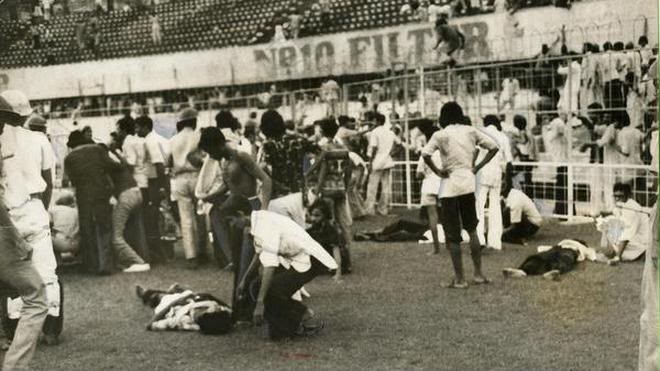
Football is supposed to be about rivalry, theatre and belonging. In Kolkata, where the rivalry between Mohun Bagan and East Bengal has for generations been woven into the city’s identity, the emotion can be almost overwhelming. But on August 16, 1980, that passion turned into tragedy.
Sixteen football supporters died at Eden Gardens during a Calcutta Football League match between the two giants. A clash among supporters triggered by a red card apiece escalated, panic spread through the stands and fans rushed towards the exits. In the ensuing stampede, people fell over one another, with 13 dying at the stadium and three more later in hospital. More than 100 people were injured.
One of the factors that made the situation particularly dangerous was the absence of proper segregation between the rival groups of supporters. Fans of Mohun Bagan and East Bengal were seated together in the Ranji Stand. What began as unrest rapidly became a fight for survival as spectators tried to escape. The tragedy subsequently reinforced the need for separate enclosures and better crowd management at football grounds.
In Goalless – The Story of a Unique Footballing Nation, Boria Majumdar and Kausik Bandyopadhyay mention an open letter written by Amal Dutta, renowned football coach, to Jyoti Basu, then West Bengal chief minister, berating him for the law-and-order failures that resulted in such a tragedy.
The Kolkata disaster was not an isolated one in the football history of that era. Across the world, stadiums have repeatedly seen the devastating consequences of overcrowding, inadequate infrastructure, poor crowd control and misplaced confidence in the ability of authorities to cope.
At Glasgow’s Ibrox Stadium in 1971, 66 people died in a crush on a stairway as supporters were leaving after Rangers played Celtic. Fourteen years later, Bradford City’s Valley Parade became the scene of one of English football’s most horrifying disasters. A fire swept through the wooden main stand in May 1985, killing 56 people and injuring hundreds.
Just weeks later came Heysel. Before the 1985 European Cup final between Liverpool and Juventus in Brussels, fighting and crowd pressure caused a wall at the dilapidated stadium to collapse. Thirty-nine people, most of them Juventus supporters, died. The match was played despite the disaster, and the consequences extended far beyond the game, including a five-year ban on English clubs from European competition.
Then came Hillsborough in 1989. Ninety-seven Liverpool supporters ultimately lost their lives in a crush during the FA Cup semi-final against Nottingham Forest. Investigations established that failures in crowd control and policing were central to the disaster, while the tragedy eventually transformed safety standards and helped drive the move towards all-seater stadiums in the upper levels of English football.
The lessons from these disasters are painfully similar. A stadium is not merely a collection of stands, gates and turnstiles. It is a living, moving mass of people, and every exit, barrier, entrance and passageway can become critical when panic takes hold.
In Kolkata, the 1980 tragedy remains especially poignant because it occurred at the heart of a football culture defined by fierce but deeply rooted loyalty. The Calcutta Football League was abandoned that year, and August 16 came to be commemorated in the city as Football Lovers’ Day.
Forty-six years later, the memory remains a warning. Football’s greatest rivalries should create memories, not funerals. The 16 who never returned home from Eden Gardens are a reminder that the responsibility of protecting supporters must always be greater than the desire to merely stage a match.
Follow RevSportz for latest sports news
The post The Day Kolkata Football Lost Its Innocence appeared first on Sports News Portal | Revsportz.