

While India attained political freedom on 15 August 1947, it achieved a form of sporting freedom a year later at the 1948 London Olympics. For a newly independent India, the London Games were more than a sporting event. They offered an opportunity for assertion and provided a stage for a young country to establish itself among the world’s successful sporting nations.
The Indian hockey team satisfied that national yearning, winning its fourth consecutive Olympic gold after triumphs at Amsterdam in 1928, Los Angeles in 1932 and Berlin in 1936. The golden journey did not stop in 1948 but continued until 1964, with a brief silver interlude in 1960, when India had to cede top spot to arch-rivals Pakistan.
When India won gold at the London Olympic hockey stadium in 1948, defeating England 4–0 in the final, much more than an Olympic victory was scripted. It was a newly independent nation’s declaration against the forces of colonialism, retribution for the humiliation inflicted by the English over almost 200 years and, finally, a statement to the world about the significance of sport in an era of decolonisation. Hockey, the victory demonstrated, held the promise of becoming the new opiate of the masses.
For many in the country, the sport offered a substitute for religion as a source of emotional attachment and spiritual passion. For many others, since it was among the earliest memorable post-Independence experiences, it infiltrated memory, shaped enthusiasms and served fantasies. Though claims of hockey being the ‘national’ game of the country originated as far back as the turn of the century and gathered momentum after the victories at Amsterdam, Los Angeles and Berlin, it was not until London that hockey’s supremacy was assured.
Compared with the Games of 1928, 1932 and 1936, London 1948 offered a fundamentally different challenge for Indian hockey. More importantly, the players, for the first time, were not representing British India but playing for their motherland. This was the first time Indians were playing under the new tricolour and against the British, under whose imperial flag they had participated in previous Games.
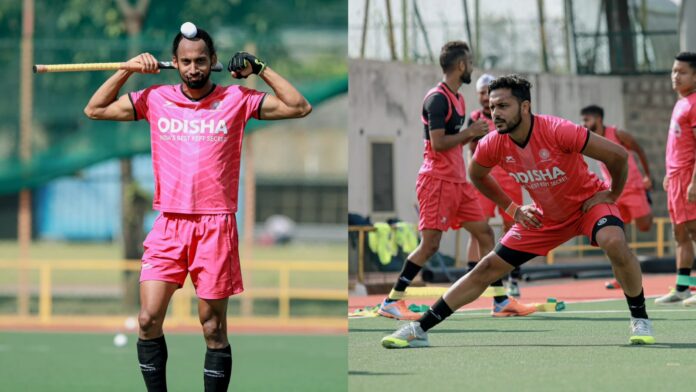
It is pertinent to recount this achievement today, on Independence Day, as India takes the field at the World Cup in the Netherlands. The build-up has been anything but ideal, with the jersey controversy dominating the headlines. But it is time for everyone back home to move beyond such issues and focus on the game at hand.
With the Asian Games a month later, a strong World Cup performance can create momentum for a sport that badly needs it. While the women are not expected to make the podium, we do expect a strong showing from them, with the team pushing some of the more fancied sides in the world. In contrast, the men are expected to win a medal, and anything less would be a disappointment.
Hockey, yet again, has a chance to galvanise the nation. Let’s do our bit to help the players do so.
Follow RevSportz for latest sports news
The post Independence, Hockey and the Power to Galvanise a Nation appeared first on Sports News Portal | Revsportz.