

Let’s start with a trivia question: how many medals did India win at the Commonwealth Games in Auckland in 1990? The answer is 32, including 13 golds. Sounds impressive, right? Until you dig a little deeper and realise that 24 of those medals were won in weightlifting, where three golds were awarded in each category at the time, one for the snatch, one for the clean and jerk, and one for the overall total.
Outside the weightlifting arena, India’s only other gold came from Ashok Pandit in shooting.
And it wasn’t only in multi-sport games where India struggled. The cricket team won the 1983 World Cup and the World Championship of Cricket in Victoria in 1985, but those were oases amidst a desert of poor results.
Hockey had already begun its descent into the abyss, with the men’s team finishing 12th and last at the World Cup in the UK in 1986. After Prakash Padukone’s All England triumph in 1980, badminton had never been able to scale such heights. Chess still awaited its Viswanathan Anand breakthrough. Football had already become irrelevant on the global stage and even on the Asian front, with India not playing in an Asian Cup between 1984 and 2011.
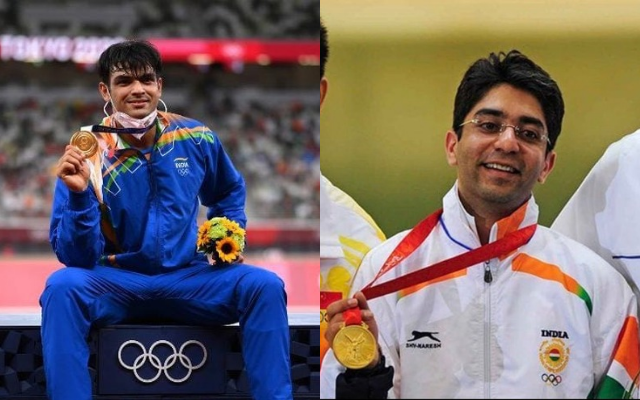
So, when those who grew up in that era read or watch criticism of Neeraj Chopra winning only a silver medal at the Commonwealth Games, the first reaction is to chuckle quietly. How expectations have changed.
It’s not that India didn’t produce fine athletes before. Milkha Singh won gold at the Empire Games in Cardiff in 1958, and every Indian remembers PT Usha’s near miss at the Los Angeles Olympics in 1984. But behind Indian athletics, and Indian sport as a whole, was a story of nearly men and women, athletes who were not quite good enough to reach the very top.
These days, athletes, cricketers and hockey players approach the big events with the confidence that they can win. That is a fundamental change, and it owes much to the athletes of the past who broke down barriers, whether that was an Abhinav Bindra in shooting, a Venkatesh Devarajan or Dingko Singh in boxing, or Karnam Malleswari in weightlifting.
Even the cricket team, once one of the few countries other nations were reluctant to invite, has changed the equation. Today, other cricket boards see a gaping hole in their finances if India don’t tour.
And while Rumesh Pathirage won Commonwealth javelin gold for Sri Lanka recently, and Arshad Nadeem won Olympic gold for Pakistan before him, would either really have been possible without the inspiration derived from watching Neeraj take down the barriers?
This is the difference, in a nutshell, as we celebrate India’s 80th Independence Day. For generations, India marched to the tune that others set. Now, our athletes have started making their own beats.
For More Exciting Articles: Follow RevSportz
The post From Nearly Men to Making Their Own Beats appeared first on Sports News Portal | Revsportz.