


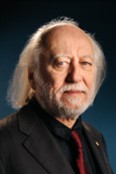
The Nobel Prize for literature for 2025 was awarded to Laszlo Krasznahorkai from Hungary for his writings in general rather than a single book, an unusual way of presentation by the Swedish Academy.
Hungary, a peaceful country, established more than one thousand years ago by St. Stephen, especially known for the beautiful shores for the famous river Danube traversing through it for more than four hundred kilometers on the Slovak Hungarian border. On 26 April 2026, people of Hungary rejected the sixteen year rule of Viktor Orban, and elected Peter Magyar to rule them. The country was a part of the Soviet bloc after the Second World War. However, in 1989, it became a republic, also became a member of NATO in 1999.
The word Hungary brings up the name of the city Budapest, ‘pearl of the Danube’, more known than the country itself. There are interesting, rather unique systems prevalent in the country. No building can be taller than ninety six meters, the number commemorates the conquest of 986 Magyar tribes who settled in the Carpathian Basin and founded the Hungarian state. People do not clink their beer mugs because that was done by the Austrian generals in 1848 when they defeated Hungary.
Customarily, they do not like them to be called by the first name which is considered impolite. They have a unique memorial, the right hand of St. Stephen, Hungary’s first king, after the rule of the Romans. Hungary is also known for the best wines they brew, especially a brand called ‘wine of kings’ known world over. No visitor returns from Budapest without a bottle of this ‘king’. Dohany Street Synagogue and Budapest caves created by deep thermal water from underneath are unique features of Budapest, the Capital.
When I heard the announcement over television about the award of the Nobel Prize to a Hungarian writer, I thought it was David Szalay who won the 2025 Booker Prize for his novel ‘Flesh’ because I had used the name of an eatable, Langos Sandwich, which is described in the novel. It is this description, which made the world understand the location of the story that was narrated by Szalay as Hungary.
I took Langos Sandwich as the title of a book that I published exclusively for our Facilitators in 2025. Hence, the thought that he won the Nobel Prize. However, it is only when I read the newspapers the next day that I understood that it was Laszlo Krasznahorkai and that it was not for a particular novel, but for his exquisite writing quality.
Ottilie Mulzet received her ‘Best Translated Book Award’ for 2025 for her translation of Krasznahorkai’s novel ‘Seiobo There Below’. She took three years to translate Laszlo’s book. I listened to her in a televised interview by the BBC where the interviewer called her the person who stood between Hungarian and the English. She spoke about the unbelievable elasticity of the Hungarian, almost saying that it is like a rubber band. She said that Hungarian did not suffer from the rigid boundaries of English with its subject, verb, object structure. In the interview, she made a provocative statement that despite English being a global language, including its use for commerce and trade, it has some deeply impoverished areas.

I decided to read him. I could buy only his ‘Destruction and Sorrow Beneath the Heavens’. As I read the first chapter ‘The Introduction to Obscurity’, I was surprised, rather shocked, to note that the entire chapter of six pages in about 1,800 words, was written in a single sentence. More interesting, as I read through, was that the language was special in the descriptions. He refers to a bus travel in the chapter titled ‘Two Pilgrims’, where he writes that ‘the driver stepped on the brake, the conductor opened the door and the vehicle, with a huge groaning sound, comes to a stop’. In yet another place, he writes that ‘the man sitting behind the steering wheel sat as if he was completely alone in the universe’, an exceptional presentation.
Reading Laszlo reminds one of many other writers and their writing styles. The first thought is about James Joyce’s Ulysses. The Irish writer’s landmark modernist novel of 1922 which brought in strongly the stream of consciousness technique has a thirty six page 3687 unpunctuated words, describing Molly Bloom’s interior monologue. William Faulkner; he won Pulitzer Prize in 1955 and 1963, wrote descriptions which were called by critics as rambling waiting sentences, which required immense patience from the reader. ‘Absalom Absalom’ featuring Southern Gothic culture has a single sentence of 1288 words. Henry James, notorious for his complex syntax and parentheticals, requires serious concentration in reading his ‘convoluted’ sentences. Lucy Ellman, who won Goldsmiths Prize, experimented with a novel, written as one single continuous sentence. Jonathan Coe holds a record in writing his ‘The Rotter’s Club’ in 2001 with a single sentence of 13,955 words. A Czech novel is supposed to be in one long sentence, which has a sentence as long as travelling through Romania, Slovakia, Serbia and Ukraine together; indeed as long as the roads in West Bengal or even those in half of Gujarat. Victor Hugo’s Les Miserables contains a famous 823 word sentence in the chapter ‘Battle of Waterloo’.
Laszlo’s ‘Destruction and Sorrow Beneath the Heavens’, translated by Ottilie Mulzet, kept me going for some time. Indeed it is a book of travel and has plenty of descriptions of the interior regions of Hungary and its neighbour, China. Despite long sentences, it carries a large number of word pictures and the travel destinations as well as the travel details are interesting. The descriptions border on philosophical contours of thought lines, though one needs a large amount of patience to go through it. Indeed, what is specially to be noted is that the plot is not complicated, the number of characters is limited, and more than both, the descriptions provide easy pictures that the author draws.
………………………………….
Prof. Sunney Tharappan, is Director of College for Leadership and HRD, Mangaluru. He trains and writes and lives in Mangaluru. Email: tharappans@gmail.com