

The 2026 FIFA World Cup is the biggest tournament football has ever staged. Forty-eight nations, 104 matches and three host countries have combined to create an event of unprecedented scale. Yet beyond the action on the pitch lies another fascinating story: money.
According to Transfermarkt data, the combined market value of all 48 squads at this World Cup stands at more than €17.5 billion, making it the most expensive football tournament in history.
The numbers underline not only the growing financial power of the sport but also the enormous gap that exists between football’s traditional giants and emerging nations.
No figure illustrates modern football’s financial landscape better than Cristiano Ronaldo.
Now 41 and likely appearing at his final World Cup, the Portuguese superstar earns a staggering €208.4 million annually at Al-Nassr. His salary alone is nearly ten times greater than Lionel Messi’s earnings at Inter Miami and almost four times higher than those of the next highest-paid player in the tournament.
Ronaldo’s income is so large that it exceeds the combined market value of several World Cup squads, including those of Jordan, Qatar and Iraq.
The influence of the Saudi Pro League is impossible to ignore. Riyad Mahrez, Sadio Mané and Ivan Toney also feature among the tournament’s highest earners, highlighting how Saudi Arabia has successfully positioned itself as one of football’s biggest financial destinations. While Europe’s elite clubs continue to dominate competitively, Saudi Arabia now commands a significant share of football’s salary market.
Interestingly, that spending power has not yet translated into international strength. Saudi Arabia’s national team remains among the least valuable squads at the tournament despite hosting some of the world’s highest-paid footballers in its domestic league.
If salaries tell one story, squad valuations tell another.
France arrive as the most valuable team at the World Cup, with a squad worth more than €1.5 billion. England and Spain follow closely behind, forming a trio that reflects Europe’s continued dominance of elite football talent.
The gap between the top and bottom of the market is striking. France’s squad is worth approximately 77 times more than Jordan’s entire team. While Didier Deschamps can call upon players valued at hundreds of millions of euros, several nations at the tournament have squads valued at less than €25 million.
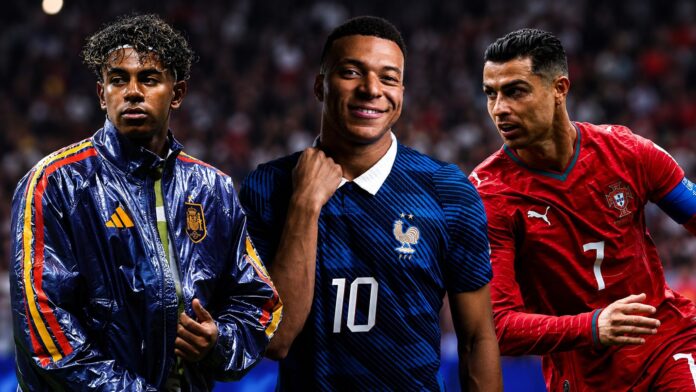
At the individual level, Kylian Mbappé, Erling Haaland and Lamine Yamal share the distinction of being the tournament’s most valuable players, each carrying a market valuation of €200 million. Their combined value exceeds the total squad value of many participating nations.
Yet football’s beauty lies in the fact that transfer values and salaries do not guarantee results.
Iran held Belgium to a draw despite the huge financial disparity between the two squads. Cape Verde stunned Spain. Curaçao frustrated stronger opponents. The World Cup continues to provide reminders that organisation, belief and execution can often narrow financial gaps, at least over 90 minutes.
Still, the broader picture remains clear. The tournament’s €17.5 billion valuation reveals where football’s wealth is concentrated. France, England, Spain, Portugal, Germany and the Netherlands alone account for more than €6 billion of the total value present at the World Cup.
As the competition progresses, trophies will be decided on the pitch rather than on balance sheets. However, the financial figures offer a revealing snapshot of the modern game: a sport in which billions are invested, global stars command extraordinary salaries, and the economic divide between nations continues to grow.
The 2026 World Cup is not only the largest football tournament ever played. It is also the richest reflection of football’s evolving economy.
Also Read: Morocco’s Rise Offers a Blueprint, India Can Reach the World Cup Too: Juan Pedro Benali
The post A €17.5 Billion World Cup: The Money Behind Football’s Biggest Show appeared first on Sports News Portal | Revsportz.