

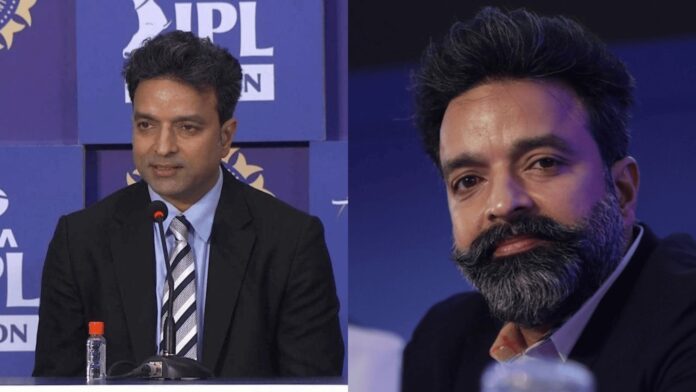
In an exclusive interview with RevSportz, IPL Chairman Arun Singh Dhumal reflected on the journey and success of IPL 2026 while addressing a host of key issues shaping the future of the tournament.
From the reason behind the seven-page advisory issued to IPL franchises and plans for the IPL’s expansion, to why broadcasters remain the league’s most important stakeholders and what the rise of franchise cricket means for the future of bilateral cricket, he provided candid insights on the road ahead. He also discussed the use of neutral venues and second-home venues in the IPL, and how they work for teams.
Dhumal also spoke highly of young sensation Vaibhav Sooryavanshi, his immense potential, and the impact emerging talents like him can have on brands such as the IPL.
Boria: The IPL is nearing its end. Yet another successful and blockbuster season in many ways. Your first thoughts?
Dhumal: Yes, it has been a phenomenal season, like all the others so far. Nobody knew until the last game who was going to make the playoffs, and that worked out brilliantly.
The teams played exceedingly well. The way Punjab Kings started, everybody thought they would be the first team to qualify, but unfortunately that did not happen.
One crucial game for both KKR and PBKS was lost to rain. But the way RR have played so far, especially Vaibhav Sooryavanshi, has been phenomenal.
Boria: How important is someone like Vaibhav as a breath of fresh air? How much does he help the IPL brand?
Dhumal: I think Vaibhav has showcased the new brand of fearless cricket in India. Who would have imagined that somebody like Vaibhav, at the age of 15, would be able to achieve what he has and surpass records set by some of the biggest names in the IPL?
The way he played in the U-19 World Cup was noteworthy. This is the new brand of fearless cricket that Vaibhav represents. Both Ayush Mhatre and Vaibhav Sooryavanshi are exceptional young talents.
These players got opportunities and a platform, and they have done exceedingly well, which justifies the tagline, “Where Talent Meets Opportunity”. We are extremely proud of them, and I think it augurs very well for Indian cricket in the years to come.
Boria: As IPL Chairman, someone like Vaibhav Sooryavanshi helps the brand as well, doesn’t he?
Dhumal: For sure. We have seen chants for Dhoni, Virat and Rohit echo around stadiums wherever they play. These kinds of stars definitely have huge traction with fans.
He has been a breath of fresh air and it augurs very well for the tournament going forward. He has time on his side.
He is only 15 and can contribute for many years to come. We have examples such as Sachin and Virat, who started early and enjoyed long careers. Virat is probably fitter now than he was before (laughs).
That is why a great deal of credit should go to the IPL for exposing young players to the best bowling attacks in the world. Before the IPL, players would largely play domestic cricket until making their international debut. One of the IPL’s biggest achievements has been bridging the gap between domestic and international cricket.
Boria: You’ve spoken about expanding the IPL and creating two windows. What exactly do you have in mind as Chairman?
Dhumal: We had planned this during the last media rights cycle. If we could move from 74 to 84 and eventually 94 games, every team would have an equal number of home and away matches.
Unfortunately, because the bilateral calendar had already been planned until 2027, it did not work out. However, when we next discuss BCCI rights, IPL rights and bilateral rights, we will explore the possibility of carving out a larger window.
More double-headers may not work particularly well for broadcasters, who are our most important stakeholders. I am hopeful we will be able to create a bigger window.
Boria: So could we see the tournament split into two parts?
Dhumal: If we go beyond 31 May, the monsoon becomes a challenge. There are two possibilities.
One is to start in mid-March and run through to the end of May, and then perhaps find another window around October, particularly as the Asia Cup takes place every alternate year.
The other option is to bring the start date forward and run the tournament from February until April. The Big Bash League finishes in January, so that could be a possibility. We will discuss all options with the boards.
Boria: What prompted the seven-page advisory?
Dhumal: There was information regarding certain incidents that came to light and were subsequently penalised. The matter was also discussed at the Apex Council meeting.
The advisory itself was not new; it has existed for some time. It was simply reinforced to ensure that everyone takes it seriously and behaves accordingly.
I am very clear on one point: players do not need to create content. They need to perform, and content will be created automatically. They do not need to become content creators. Their focus should remain on the field.
This is a very demanding tournament with extensive travel. Given that schedule, asking players to spend time creating reels does not really make sense to me.
Boria: Will the use of neutral venues such as Dharamshala and Guwahati increase in the coming years?
Dhumal: The idea has been around since the early years of the IPL. Franchises having an additional venue alongside their primary home venue can work very well and helps the tournament reach more parts of the country.
We have received tremendous responses to matches in places such as Guwahati and Raipur. More teams could explore alternate home venues.
Also, hosting seven matches at a single venue can become quite stretched.
Boria: There were reports during the season suggesting IPL numbers had dropped. Were you concerned?
Dhumal: Whether we like it or not, India is a one-sport country. There is nothing that can compete with cricket.
The broadcaster made it very clear that, for the first time, we crossed 1.1 billion views. Connected TV consumption increased by 25 per cent, digital reach increased by 15 per cent, and watch time grew by 7 per cent.
If our broadcaster is happy with the numbers and engagement levels, then there is no reason for concern. I am very pleased with the way this season has gone, and I believe future editions will be even better.
Boria: Do you see franchise leagues becoming the dominant force, with bilateral Test cricket potentially losing out in the long run?
Dhumal: I still think there is a lot of love for Test cricket.
The India-England Test series in England last year captured the imagination of fans, and people were invested in seeing how it unfolded.
There remains significant scope for Test cricket. We simply need to work out how best to utilise it. There are markets and teams where the appetite for Test cricket remains very strong.
Broadcasters are the most important stakeholders. They hold both BCCI and IPL rights, and we have seen that every cricketing nation wants a series against India because it helps monetise the game.
Money is important. During the COVID period, we did our duty diligently because cricket needed to survive and grow globally.
However, there is a limit to how much bilateral cricket India can play. That is why we have seen the rise of competitions such as the Big Bash, The Hundred and SA20.
Many Associate nations that do not even have ODI status are launching leagues. If cricket follows football’s path, we need to be prepared for that reality because, ultimately, it is the fans and broadcasters who fund the game.
With bilateral cricket, ICC events and franchise leagues all competing for space, player burnout is a genuine concern. We need to plan carefully in the next cycle to manage workloads and provide greater value to fans.
Boria: Cricket has always been a contest between bat and ball. Recently, bowlers have often looked like bystanders. Do we need to do more to protect them?
Dhumal: You are one of the best commentators in the game, and you have seen how batting has evolved over the years.
I think the same kind of evolution has to happen in bowling. Bowlers who consistently execute their plans, yorkers, bouncers and variations can still be very effective.
It is ultimately about application. Bowlers will continue to learn, and we have seen some exceptional bowling performances in this league as well.
Players such as Prince Yadav and Shakib Hussain have done outstanding jobs. Going forward, bowlers need to think more carefully about the lines and lengths they use against specific batters.
With the amount of technology available today, analysing opponents has become easier than ever. It simply requires time, understanding and application.
Boria: Like Lionel Messi passing the baton to Lamine Yamal in football, could we see Virat Kohli passing the baton to Vaibhav Sooryavanshi? Also, do you support any IPL team?
Dhumal: Not really. I just support good cricket.
It is a treat to watch this young boy play so fearlessly. It does not matter whether Jasprit Bumrah or Pat Cummins is bowling to him; he keeps his eyes fixed on the ball and looks to clear the boundary.
Yashasvi Jaiswal is also an exceptional talent across formats. In one game, Yashasvi scored 29 off 29 deliveries while Vaibhav scored 97 off 29 deliveries. That says it all.
Boria: I’ll end it there, Arun Dhumal. Absolute pleasure speaking with you.
[ Interview transcribed by Divyasree De ]
Follow RevSportz for latest sports news
The post ‘If Cricket Goes the Football Way, We Must Prepare for It’: Arun Dhumal on the Game’s Future appeared first on Sports News Portal | Revsportz.