

By Subhash Chandra Agrawal
India urgently needs a comprehensive overhaul in its food safety ecosystem, especially in public distribution systems such as school Mid-Day Meal programmes, railway catering, eateries, and packaged food regulation. Frequent reports of food contamination, unhygienic cooking conditions, adulteration, and unsafe ingredients have raised serious concerns about public health, particularly affecting children and economically weaker sections.
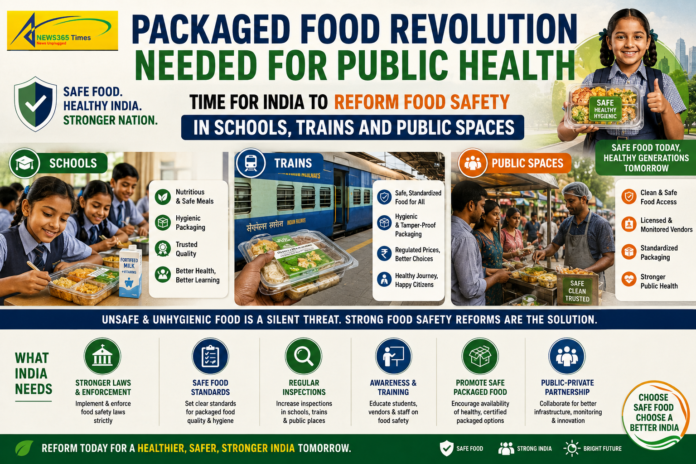
The recent incident in Saharsa, Bihar, where nearly 150 schoolchildren reportedly fell sick after consuming Mid-Day Meals once again exposes the deep-rooted flaws in the existing system. Such disturbing cases involving insects, rodents, reptiles, contaminated raw materials, and poor kitchen hygiene are repeatedly reported from various parts of the country. It is therefore necessary that freshly cooked food in schools and trains be gradually replaced with hygienically packed and scientifically prepared baked food products from reputed manufacturers.
IRCTC Can Become India’s Largest Public Food Safety Network
The Indian Railway Catering & Tourism Corporation (IRCTC) can play a transformative role in this direction. Dedicated IRCTC food-processing and baked-food units should be established in every district of the country to manufacture standardized, packaged food products for schools and railway passengers. Such units can also generate large-scale rural employment while reducing migration towards overcrowded cities.
The initiative can further create healthy competition in the food sector by offering quality food products at affordable prices. Long-term tax-free bonds and CSR participation from large corporates can help fund this ambitious national project.
Stronger Food Safety Enforcement is Essential
The Food Safety and Standards Authority of India (FSSAI) deserves appreciation for taking steps such as hygiene ratings for eateries and regulation of repeatedly used cooking oil. However, enforcement must go beyond cosmetic dining areas and cover kitchens, storage facilities, and food preparation practices.
Mandatory installation of RO water purifiers, separate kitchenware for vegetarian and non-vegetarian food, and transparent food safety disclosures can significantly improve consumer confidence.
Adulteration and Diabetes Crisis Demand Immediate Action
The issue of adulterated honey, especially reports suggesting the use of imported sugar syrups bypassing standard tests, requires urgent intervention. Internationally accepted NMR spectroscopy testing standards should be made compulsory for honey sold in India.
India is simultaneously witnessing an alarming rise in diabetes cases. Encouraging the commercial use of brown sugar instead of refined white sugar can become an important preventive measure in addressing the growing diabetic epidemic.
Need for Regulation in Milk Products and Packaged Water
Considering repeated incidents involving synthetic milk and spurious dairy products, only branded and certified milk products should be permitted for sale in urban markets where reliable supply chains already exist.
Similarly, dual pricing practices for packaged water and food products in airports, theatres, hotels, and flights must be prohibited as they exploit consumers unfairly. Expansion of IRCTC’s Rail Neer model across India can provide a strong public-sector alternative.
Food Wastage at Marriage Functions Must Be Controlled
India continues to witness massive food wastage during weddings and social gatherings while millions still struggle for basic meals. Excessive buffet culture often leads to large quantities of edible food being discarded. Strict policy reforms and social awareness are necessary to reduce such wastage and encourage simpler, more responsible celebrations.
Encouraging Indian Food Brands and Co-operative Success
The global recognition achieved by cooperative giant Amul, which ranked among the world’s top food brands, demonstrates India’s capability to build globally respected food institutions. Public-sector and cooperative food brands should receive greater support to strengthen India’s food security and manufacturing ecosystem.
Transparency in Eateries and Public Food Centres
Recent directives in some states mandating display of ownership details, CCTV surveillance, and hygienic standards in food establishments are welcome steps toward accountability and transparency. Public trust in food establishments can only be restored through strict compliance and continuous monitoring.
Promoting Vegetarianism and Ethical Food Practices
With vegetarianism gaining popularity globally, India should take leadership in promoting healthy vegetarian food internationally, much like it successfully promoted Yoga worldwide. Separate kitchens and utensils for vegetarian and non-vegetarian cooking in eateries can also help respect the sentiments and preferences of millions of consumers.
India today stands at a critical juncture where food safety is no longer merely a regulatory issue, but a national public health priority. The country requires bold reforms, stronger institutions, technological monitoring, and ethical food governance to ensure safe and healthy food for every citizen.